A premise describes the dramatic situation at the heart of a narrative. The following five-step premise development framework helps you collect the raw ingredients of exceptional storytelling (and marketing!) in one place.
Step 1: Understand the Assignment
The point of premise development is to select powerful, exciting core story ingredients. As you do so, your personal creative goals will become easier to recognize, refine, and clarify. If you set goals wisely (and early) and pursue them faithfully enough throughout the drafting process, your rough drafts will come out smoother. If you can sharpen those goals further as you revise, and present them stylishly enough in your pitches, your sales might be swifter.
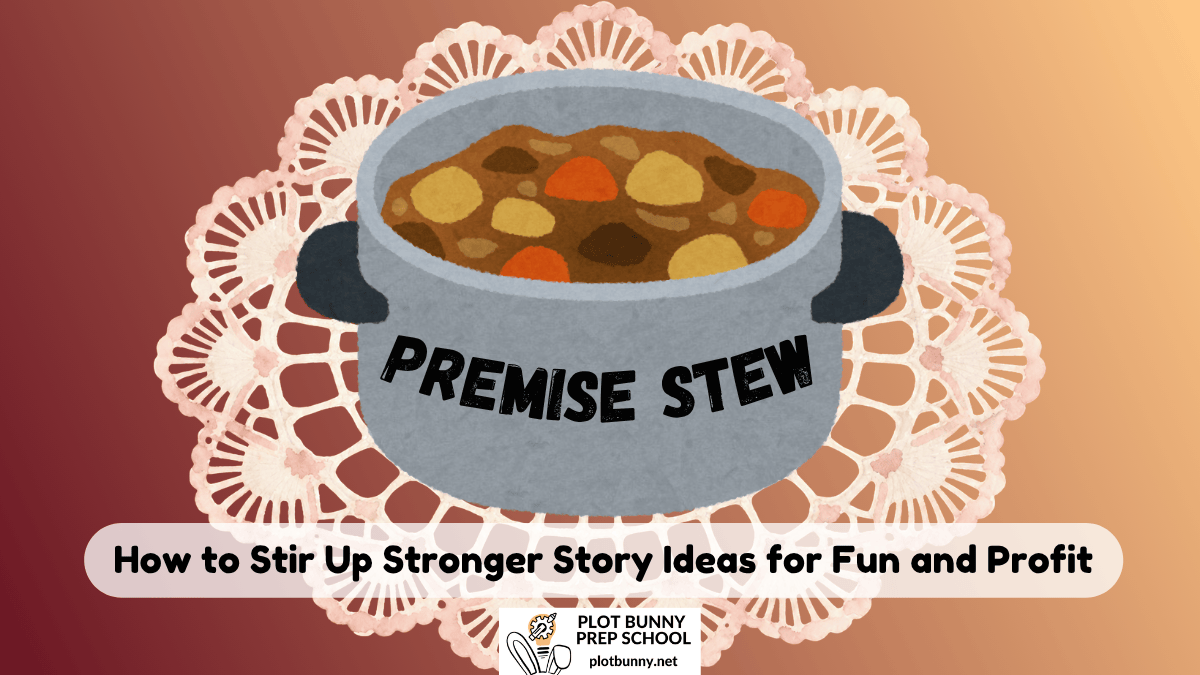
A sturdy premise, like a strong sales pitch, is two things: exciting and simple enough to describe quickly. In premises and pitches alike, the same core ingredients come together to make a deliciously entertaining, suspenseful, and unique stew.
Think of premise development as a writer’s version of mise-en-place—a habit that can benefit anyone from zealous planners to seat-of-the-pants improvisers. Planning diligently will not guarantee success if your story ingredients are bland and poorly combined. Improvising wildly will not guarantee failure if your central ingredients are zestful and well-mixed.
The best way to check the sturdiness of a premise is to practice pitching it to yourself—or to your critique partners, if you value their early feedback. Pretend the story is finished and figure out how you’d summarize and promote it to strangers.
After you finish the story, you’ll have to pitch it anyway… if you want to sell it. No matter how long, complex, or experimental your story may turn out, you’ll only have about 30 seconds or half a page to intrigue someone. Frankly, that’s all you’ll need, if your premise is sturdy enough.
My framework helps you select high-quality story ingredients and then combine them in a sample pitch to make sure they work well together.
Step 2: Understand the Process
To develop an exciting, simple premise, we will:
Gather seven ingredients we can combine dramatically to give any story premise its unique identity and appeal.
- Cast: the party who will experience and influence the story’s plot most intensely.
- World: the place that will host and regulate most of the story’s plot.
- Action: the project that will anchor and organize the story’s plot.
- Tension: the predicament that will complicate the story’s plot.
- Impetus: the provocation that will jump-start the bulk of the story’s plot.
- Endgame: the priority that will justify and energize the story’s plot.
- Concept: your plan for categorizing and promoting the finished, polished story.
Divide each ingredient into smaller parts to prepare it for use in the full story.
- Central pieces to follow throughout the whole story, to keep the story focused.
- Key properties to reference throughout the story, to keep the story cohesive and interesting.
- Main priorities to emphasize throughout the story, to give the story purpose, direction, and momentum.
- Ultimate products to deliver in the finished story, to render the story meaningful and cathartic.
Step 3: Design a Sturdy Premise
Let’s get to work. Choose your ingredients, divide them into useful parts, and describe what you end up with, using as much or as little detail as you like. I recommend summarizing each ingredient in a couple sentences or a few bullet points.
If you need more guidance, use the suggestions below.
CAST: identify the central character(s) and their key traits, main motivations, and ultimate needs.
- Central character(s): the individual or group most deeply involved and invested in the story’s outcome.
- Key traits: the special qualities that influence how the central characters behave and progress throughout the story.
- Main motivations: the central character’s reasons for persevering.
- Ultimate needs: something the central characters must attain, learn, or accept before they can succeed.
WORLD: identify the central setting and its key locations, main arena, and ultimate destination.
- Central setting: the general time, space, and circumstances in which the story takes place.
- Key locations: the sites or regions essential to the story’s action.
- Main arena: the specific area in which most of the action takes place.
- Ultimate destination: the place the characters search for or end up in the story.
ACTION: identify the central plotline and its key structure, main mystery, and ultimate revelation.
- Central plotline: the endeavor that drives and defines the story.
- Key structure: the type of action, such as a quest, investigation, chase, competition, etc.
- Main mystery: the question the action is supposed to answer.
- Ultimate revelation: the surprising answer or solution the action reveals.
TENSION: identify the central conflict and its key source, main stakes, and ultimate threat.
- Central conflict: the power struggle at the heart of the narrative.
- Key source: the antagonist or other reliable source of adversity in the conflict.
- Main stakes: the sweet rewards awaiting the victors.
- Ultimate threat: the calamity awaiting the losers.
IMPETUS: identify the central inciting incident and its key event, main cause, and ultimate effect.
- Central inciting incident: the experience that brings the central characters, setting, and conflict together.
- Key event: the specific, spectacular event associated with the incident.
- Main cause: the circumstances that make the incident possible, necessary, or important.
- Ultimate effect: the changes and challenges the incident introduces.
ENDGAME: identify the central objective and its key deadline, main risk, and ultimate price.
- Central objective: the agenda or “MacGuffin” the central characters pursue throughout the story.
- Key deadline: the time by which the objective must be achieved or lost forever.
- Main risk: what the characters must put in jeopardy to advance toward the objective.
- Ultimate price: what the characters must pay, give up, or sacrifice to reach the objective.
CONCEPT: identify the story’s central device, key audience, main genre, and ultimate comps.
- Central device: anything particularly special and appealing about the way the story is told, such as an unusual theme, narration style, perspective, tone, etc.
- Key audience: the group the story will resonate with most, such as a specific age group.
- Main genre: the category in which the story fits best, such as romance or science fiction.
- Ultimate comps: other, similar works against which the story can be compared favorably.
These suggestions are meant to offer inspiration, not force you to fit your story into a mold. You don’t have to decide all these details in advance, fit them within the suggested categories neatly, or even commit to them permanently. You’re just brainstorming possibilities, to make sure your premise has the strength to carry a full story. You’re acquainting yourself with the flavors most full-bodied stories tend to deliver.
If you’re a natural improviser like me, do not let this or any other creative writing resource rob you of your freedom to explore and experiment.
Step 4: Craft a Sample Pitch
To double-check the sturdiness of your premise, craft a sample pitch. Describe your story’s premise in a few enticing sentences, accounting for all the ingredients without spoiling the full story’s biggest twists or true ending. Try to limit your pitch to 100 words or less. To fit your pitch within that limit, you’ll need to focus on sharing what’s unique and exciting about your premise.
A good pitch does not have to explain itself in perfect detail. It just needs to make sense and show off. The full context belongs in the full story!
Step 5: Use As Needed
This framework was designed as a goal-setting resource, but it can be used to support any stage of the creative process.
- Studying: Learn how to analyze any story more critically and comprehensively.
- Planning: Define and sharpen a story idea to yield stronger outlines and smoother rough drafts.
- Drafting: Use your ingredients list or sample pitch as a creative polestar, to keep an unfinished story on track or tighten up a wayward work-in-progress.
- Processing feedback: Understand which suggestions will help you fine-tune and reach your personal storytelling goals, especially when suggestions are contradictory.
- Revising: Make sure your story includes all the right ingredients, in the right amounts, and uses them well.
- Pitching: Summarize complex story ideas in simple, enticing terms to sell them better.
I like to paste a sample pitch at the beginning of every new draft, to end the tyranny of the blank page. Then, whenever I reopen the document, I reread it to renew my concentration and motivation. I hope you find a good use for this framework too!
Download the worksheet as a Google Doc here or as a PDF file here!
P.S. If you’re looking for an editor who cares deeply about premise and plot design to help you polish a story idea, draft, or book proposal, consider hiring me!

