A premise describes the dramatic situation at the heart of a narrative. The following five-step premise development framework helps you collect the raw ingredients of exceptional storytelling (and marketing!) in one place.
A premise describes the dramatic situation at the heart of a narrative. The following five-step premise development framework helps you collect the raw ingredients of exceptional storytelling (and marketing!) in one place.
I used to have trouble deciding how my stories should end. I could write from cliffhanger to cliffhanger easily. But draft a satisfying resolution? Provide closure? That didn’t come naturally to me at all—not until I started paying more attention to my stories’ themes.
To prevent (or fix) infodumps, “muddy” middles, and pointless tangents, cultivate meaningful dramatic tension in every scene. Here’s how!
I designed the Plot Pattern to be a plot development “quick start guide”—simple enough to grasp quickly and flexible enough to suit any genre. It is a six-step story recipe that calls for two basic ingredients: a predicament and a protagonist.

To devise intriguing character motivations, you must dig beneath your characters’ traits and get inside their minds. My Motivation Map worksheet provides a one-page path to giving your characters enough direction, determination, and depth to make them memorable.
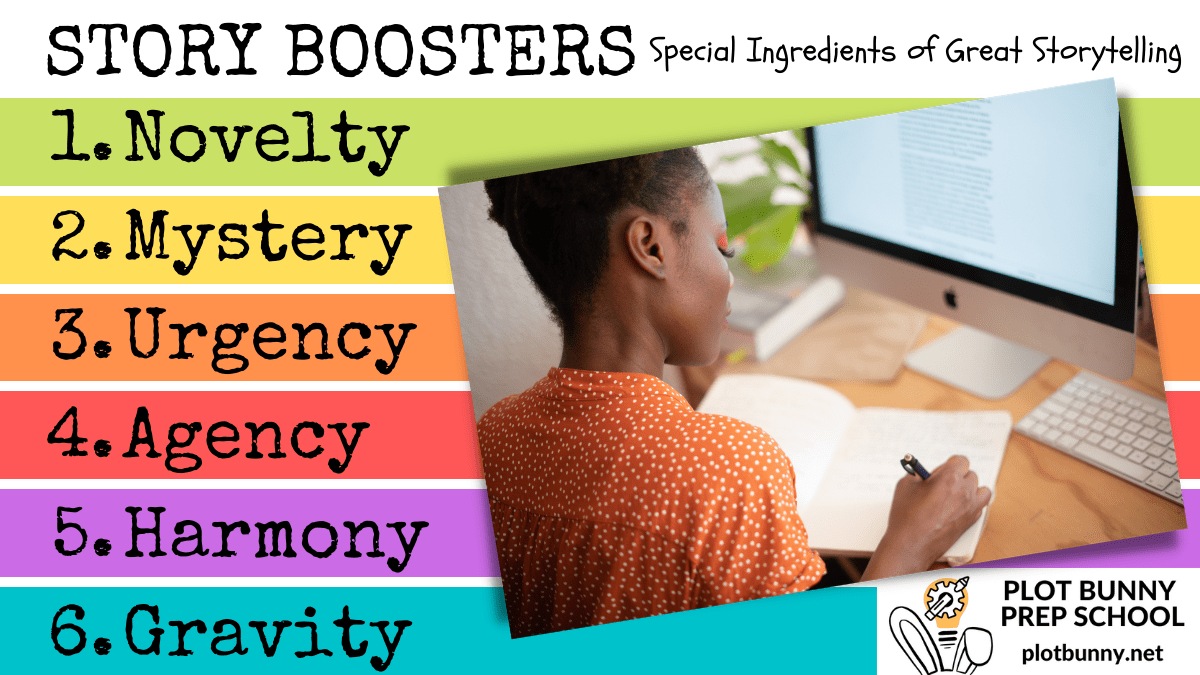
The ability to dream up and pass down stories is what makes humans special, and the stories that we believe wield tremendous power over us. They can shape, transform, save, and end lives—and they don’t need to be true or well-crafted to do so. What makes stories so powerful? I have some ideas.

